Hybrid working is now the standard. Most organisations ask their people to come in two or three days a week, and most employees value the freedom to choose where they work. That freedom raises a fair question: when you can work from anywhere, why choose the office?
We asked our own team. Flexible working is part of our culture at GoBright, yet we still value our office days. Below are the eight benefits our colleagues mentioned most. What do you value most about your office days?
1. Interazione sociale e divertimento
Arriving a little early, making a cup of tea and catching up with colleagues before the day starts. A shared lunch, or a walk during the break. These moments are what the office does best. You get to know each other better in person. Microsoft Teams keeps everyone connected, but a video call is not the same as a face-to-face conversation. The office is also the natural place for team activities and the informal bonding that builds a strong team. We are not alone in this. In CBRE’s 2026 occupier survey, organisations named colleague engagement as the top reason employees come into the office, cited by 77%.
2. Imparare gli uni dagli altri
In the office, you work alongside colleagues from different teams. You pick up how other departments think and work, and that shapes how you do your own job. This matters most early in your career. Sitting next to an experienced developer, for example, helps you pick up terms and processes faster than any manual. You also absorb the company culture and see what your colleagues are working on, which is much harder from home. Over time, this builds confidence. It helps you become a versatile colleague who takes initiative and speaks up. It also supports your wellbeing.

3. Structure and focus
The office gives your day a clear structure. You travel at a set time, start at a set time and leave at the end of the day. That routine helps many people get going, and it draws a clear line between work and home. The office also helps you focus. At home, especially in a busy household, ten other things compete for your attention. In the office, everyone around you is working too, and that is motivating. Your tasks get your full attention.
4. A well-equipped workplace
A desk with two monitors, a sit-stand desk and an ergonomic chair beats a dining table every time. The right equipment helps you work comfortably and get more done in less time. We also appreciate the small things. Our canteen has fresh fruit, drinks and snacks, so a break is always close by.
5. Quick answers from colleagues
Need to check something quickly? In the office, you walk over to a colleague’s desk and ask. No waiting for an email reply, and no watching a Teams chat for the typing indicator. Face-to-face conversations are also clearer. You see body language and tone, so misunderstandings are resolved faster.
6. Room for creativity
You can brainstorm in a collaboration app, but ideas flow more easily when you share a room. You build on each other’s thoughts in real time and capture them on a whiteboard as you go. For us, the office is where inspiration happens. A good creative session needs energy, and that energy is easier to create together.

7. A sense of belonging and purpose
People do their best work when they feel part of something. The office helps colleagues feel seen and heard, and it can make a real difference for anyone who feels isolated working from home. It also connects people to the organisation’s purpose. Employees who share a workplace share its identity, its goals and its culture. That is much harder to build when a team rarely meets.
8. Better collaboration and meetings
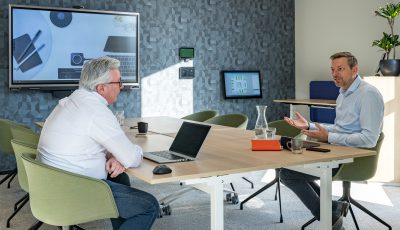
Collaboration is simply easier in person. You review work together, give and receive feedback on the spot and develop professionally along the way. The office is also the best place to welcome clients and partners. A well-equipped meeting room leaves a strong impression of your organisation, and a lunch together often does the rest.
Make every office day count
The office has clear benefits, but so does working from home. Research supports a balance: a large randomised trial published in Nature in 2024 found that two home days a week cut employee turnover by a third, with no loss of performance. The real question is not whether people come to the office, but whether their office days deliver. These benefits only appear when the office works. Colleagues need to be there, a desk or meeting room needs to be free, and the day needs to run smoothly. Yet many offices are crowded on Tuesday and Thursday and half empty on Friday. Read how to balance attendance across the week in our article on [the camel problem](link to new resource page), or see how GoBright supports your return to office strategy.
Want to know more? Book a free expert consultation. Our Smart Workplace Experts will show you how to make every office day count.