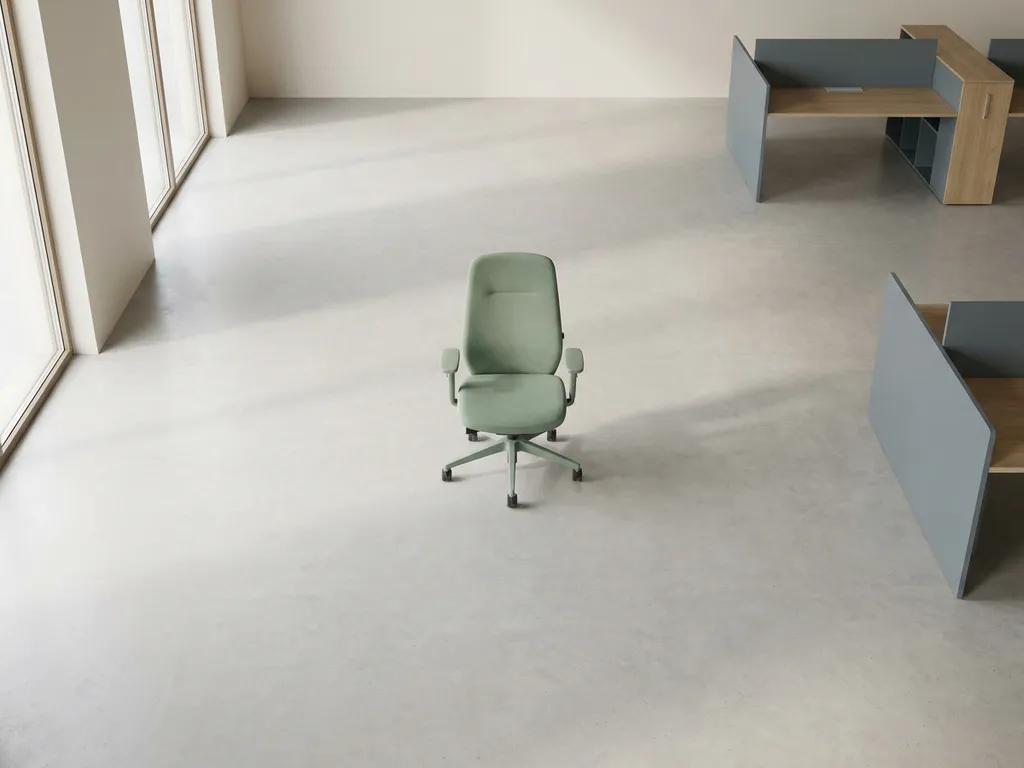
Workspace choice and employee autonomy are directly connected: when employees have the freedom to choose where and how they work, they experience greater ownership over their work, which strengthens motivation, focus, and job satisfaction. This connection matters most in hybrid and flexible work environments, where the physical office must actively support different working styles rather than impose a one-size-fits-all setup. The questions below unpack exactly how this relationship works and what organizations can do to make it real.
How does workspace choice affect employee motivation?
Workspace choice directly increases employee motivation by giving people control over their working conditions. When employees can select an environment that matches their task, mood, or collaboration needs, they feel trusted and respected. That sense of trust is a core driver of intrinsic motivation, which is more sustainable than external incentives like bonuses or deadlines.
Motivation thrives when people feel competent, autonomous, and connected to others. Workspace flexibility supports all three. A developer who can choose a quiet focus room feels equipped to do deep work. A team that books a collaborative space together feels socially connected. Neither outcome is possible in a rigid, assigned-desk environment where the space dictates the work rather than supports it.
The reverse is also true. When employees have no say in where they sit or how their environment is set up, motivation erodes. The office starts to feel like something done to them rather than for them, and that perception has a direct impact on engagement and retention.
What types of workspaces support employee autonomy?
Workspaces that support employee autonomy are those designed for variety and choice. Rather than a single type of setting, an autonomous workplace offers a range of environments so employees can match their space to their task and working style.
The most effective layouts typically include:
- Focus zones – quiet, low-distraction areas for deep individual work
- Collaboration spaces – open or semi-open areas designed for team discussions and creative sessions
- Social areas – informal spaces for spontaneous conversations and relationship-building
- Bookable meeting rooms – private spaces for structured meetings, calls, or confidential work
- Flexible desks – hot desks or neighbourhoods that employees can reserve based on their schedule
The key is not the number of space types but the ease with which employees can access them. If booking a room or finding a free desk is cumbersome, the autonomy is theoretical rather than practical. Friction in the system undermines the freedom the layout is trying to create.
Why does lack of workspace flexibility reduce productivity?
Lack of workspace flexibility reduces productivity because it forces employees to work in environments that do not match their tasks. A person doing focused analytical work in a noisy open-plan office, or a team trying to collaborate in a space designed for solo work, will both perform below their potential. The mismatch between task and environment creates cognitive friction that drains energy and time.
Beyond individual performance, inflexible workplaces also create logistical frustration. When desks are assigned and rooms are scarce, employees waste time searching for available spaces, dealing with double bookings, or working in suboptimal conditions because no better option exists. These are not minor inconveniences. Over the course of a week, they add up to significant lost productivity across the organization.
There is also a wellbeing dimension. Employees who feel trapped in an unsuitable environment report higher stress and lower job satisfaction. Poor wellbeing and poor productivity reinforce each other, creating a cycle that is difficult to break without addressing the root cause: the absence of meaningful workspace choice.
How does desk booking technology enable autonomous working?
Desk booking technology enables autonomous working by giving employees a simple, reliable way to choose their workspace in advance or on the day. Instead of arriving at the office and hoping for a suitable spot, employees can see real-time availability, reserve a desk that fits their needs, and even locate colleagues they want to work near. The technology turns the intention of flexibility into a practical, daily reality.
Good desk booking systems do more than just reserve a seat. Features like interactive floor maps, colleague-finding tools, and team booking options allow employees to plan their office day with confidence. They know where they will sit, who will be nearby, and whether the space suits their work. That predictability is what makes autonomous working feel safe rather than chaotic.
Our Smart Office platform is built around exactly this principle. The desk booking system connects with room booking, visitor management, and digital signage in a single unified platform, so employees can manage their entire office experience from one place. Licensing is per desk rather than per user, which makes it cost-efficient as organizations scale their flexible working strategy.
What is the difference between flexible working and activity-based working?
Flexible working refers to freedom over when and where work happens, including options like remote work, adjusted hours, or hybrid schedules. Activity-based working (ABW) is a specific workplace design philosophy focused on how work happens, where the office is structured around different types of activities rather than assigned individual desks.
The two concepts are related but distinct:
- Flexible working is primarily a policy and scheduling decision. It gives employees autonomy over their time and location, including whether they come into the office at all.
- Activity-based working is a physical and cultural design decision. It structures the office into zones for different work modes and removes personal desk ownership entirely.
- The overlap is that both require employee trust and meaningful choice. ABW without genuine flexibility becomes a constraint rather than an enabler. Flexible working without a well-designed office means the days employees do come in are not productive.
Organizations that combine both approaches, offering schedule flexibility alongside a thoughtfully designed ABW environment, tend to see the strongest results in employee autonomy, engagement, and space efficiency.
How can organizations measure whether workspace choice is working?
Organizations can measure the effectiveness of workspace choice by tracking a combination of occupancy data, employee feedback, and productivity indicators. No single metric tells the full story, but together they reveal whether the office is being used in the way it was designed and whether employees feel genuinely supported.
Useful metrics include:
- Desk and room utilization rates – are spaces being booked and actually used, or are there patterns of no-shows and ghost bookings?
- Peak vs. off-peak distribution – is demand concentrated on certain days, suggesting the layout or booking system needs adjustment?
- Employee satisfaction scores – do employees feel they can find a suitable workspace when they need one?
- Booking abandonment patterns – are employees booking and then cancelling, which may signal friction in the process?
- Collaboration frequency – are teams successfully coordinating their office days and working together in person?
Workplace analytics tools make this kind of measurement straightforward. When booking data flows automatically into dashboards, facility managers and operations leaders can identify underused zones, adjust space allocation, and make evidence-based decisions about the office layout. Measurement is not just about proving ROI. It is about continuously improving the environment so that workspace choice remains meaningful as the organization and its working patterns evolve.
How GoBright helps with workspace choice and employee autonomy
We designed our platform specifically for organizations that want to move beyond assigned desks and fixed meeting rooms toward a workplace that genuinely supports how people work today. Here is what that looks like in practice:
- Desk Booking with real-time maps – employees can see exactly which desks are available, filter by zone or amenity, and book in seconds from the app, Outlook, or Microsoft Teams
- Find My Colleague – employees can locate teammates and book desks nearby, making spontaneous collaboration easy without losing the flexibility of hot-desking
- Room Booking with live availability – meeting rooms can be reserved instantly, extended on the spot, or released automatically if the meeting does not start, eliminating ghost bookings
- Workplace Analytics – occupancy data, utilization trends, and space flow reports give facility managers the insight they need to optimize the office continuously
- ISO 27001 certified and GDPR compliant – all data is hosted on European servers, so employee and organizational data stays secure and compliant
The result is an office that employees actively choose to come to because it works for them, not one they tolerate. If you want to see how this fits your organization, get in touch with us and we will show you what is possible.
Frequently Asked Questions
How do we get started with transitioning from assigned desks to a flexible workspace model?
Start with a workplace audit to understand how your current space is actually being used — occupancy sensors or manual observation can reveal which desks and rooms are consistently underutilized. From there, pilot a small hot-desking zone alongside your existing assigned desks so employees can experience the flexibility without a full overnight change. Introduce a desk booking tool early in the process so that choice feels structured and predictable rather than chaotic, and gather employee feedback throughout to refine the rollout before scaling it organization-wide.
What if some employees resist giving up their assigned desks?
Resistance to losing assigned desks is extremely common and usually stems from two concerns: loss of personal space and uncertainty about finding a suitable spot when they need one. Address both directly — involve employees in the design of the new workspace, explain the variety of zones available to them, and make sure the booking system is genuinely easy to use before you remove assigned seating. When employees can reliably find a desk that suits their work on any given day, the attachment to a fixed seat tends to fade naturally over time.
Can workspace choice work for teams that need to sit together regularly?
Yes — most modern desk booking platforms support team or neighbourhood booking, which allows a group to reserve a cluster of desks together for the days they are all in the office. This preserves the collaborative benefits of proximity without reverting to permanent assignment. The key is setting up named team zones or neighbourhoods within your floor plan so that groups have a consistent area to anchor to, while still benefiting from the flexibility to choose different spaces for individual focused work.
How much workspace variety does an office actually need to support autonomous working?
There is no universal formula, but a practical starting point is to ensure your office covers at least three distinct work modes: focused individual work, collaborative group work, and informal social interaction. The right ratio of each depends on your team's actual work patterns — a predominantly creative or project-based workforce will need more collaboration space, while an organization with a lot of deep analytical work will need a higher proportion of quiet focus zones. Workplace analytics data from your booking system is the most reliable way to calibrate this over time rather than guessing upfront.
What are the most common mistakes organizations make when implementing workspace flexibility?
The most frequent mistake is redesigning the physical space without updating the technology and culture to match — removing assigned desks without providing a reliable booking system leaves employees feeling unsettled rather than empowered. A second common error is under-communicating the change, leaving employees to figure out the new system on their own, which breeds frustration and low adoption. Finally, many organizations set up flexible workspaces and then never revisit the layout or space mix, even as working patterns shift — treating it as a one-time project rather than an ongoing, data-informed process.
Does giving employees workspace choice have any impact on in-office attendance?
Research and workplace data consistently show that employees are more likely to come into the office when they trust that the experience will be productive and worth the commute. When workers can book the right desk, find their teammates, and access the spaces they need without friction, the office becomes a deliberate choice rather than an obligation. Organizations that invest in genuine workspace flexibility typically see more consistent and purposeful in-office attendance compared to those that mandate presence without improving the environment.
How do we ensure workspace choice remains equitable across different employee roles and seniority levels?
Equity in workspace access means ensuring that booking systems, space policies, and amenities are available to all employees on the same terms — not just senior staff or those who happen to arrive earliest. Avoid creating informal hierarchies by reserving premium spaces for leadership or allowing long-term holds that effectively re-create assigned seating for some employees. Transparent booking rules, automatic release of unused reservations, and anonymized utilization reporting all help ensure the flexibility you have designed is genuinely accessible to everyone in the organization.