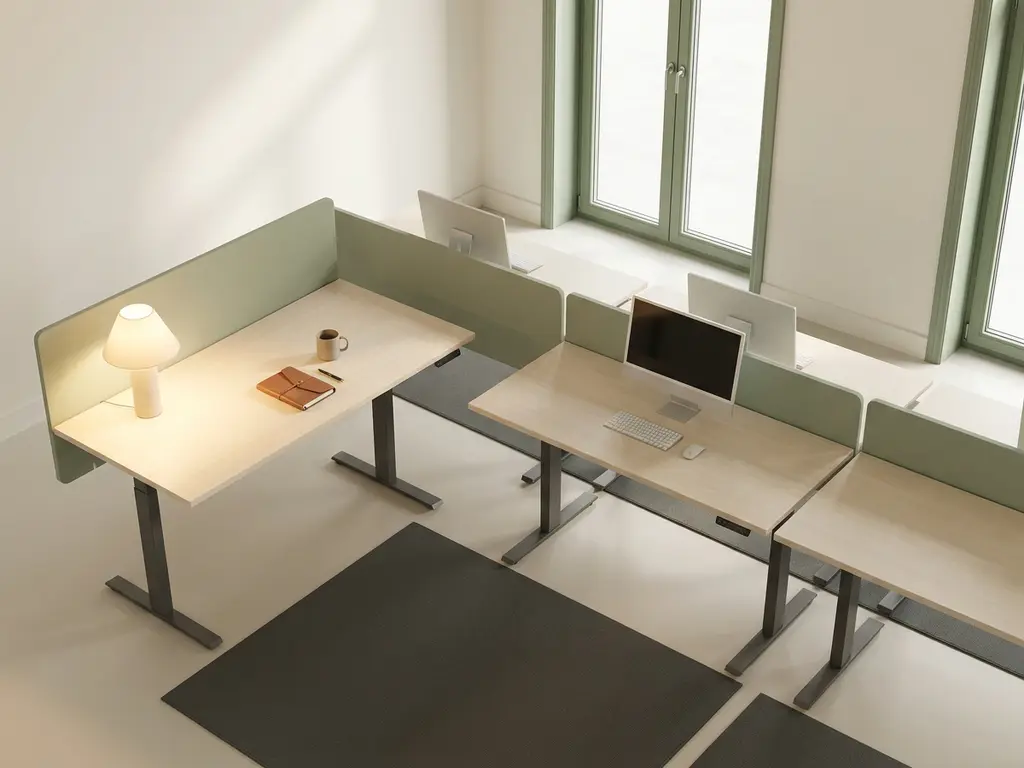
Yes, flexible workspace reservations can genuinely improve company culture. When employees have the freedom to choose where and how they work, they feel more trusted, more engaged, and more connected to their colleagues. This shift from assigned seating to intentional, flexible booking changes not just how people use space but how they relate to work itself. Below, we unpack the key questions that sit behind that answer.
How do flexible workspace reservations affect employee collaboration?
Flexible workspace reservations improve collaboration by making it easier for people to sit near the colleagues they actually need to work with on any given day. Instead of being locked into a fixed desk far from their team, employees can coordinate their bookings, choose adjacent workspaces, and create spontaneous moments of connection that assigned seating rarely allows.
This kind of intentional proximity matters more than most organisations realise. When people can find each other quickly and sit together without friction, informal knowledge-sharing increases. Ideas surface in hallway conversations and at shared tables rather than in scheduled meetings. Over time, that organic interaction builds the kind of trust that strengthens teams.
Features like Find My Colleague and Team Booking make this even more practical. Rather than texting around to figure out who is in the office and where, employees can see colleagues’ availability directly through the booking platform and reserve desks in the same zone. The result is a workplace where collaboration feels natural rather than effortful.
What does company culture look like in a hybrid workplace?
In a hybrid workplace, company culture is built through intentional moments rather than constant physical presence. Culture no longer lives in the office by default. It has to be actively designed into the spaces, tools, and routines that employees encounter whether they are working remotely or on-site.
The strongest hybrid cultures share a few recognisable traits:
- Psychological safety: Employees feel equally included regardless of where they work on a given day
- Visibility without surveillance: People know who is in the office without feeling monitored
- Consistent rituals: Team check-ins, shared lunches, and collaborative sessions are anchored to office days
- Fair access to space: No one group dominates the best meeting rooms or collaboration zones
- Autonomy with accountability: Employees choose their schedule within clear expectations
Workplace flexibility is not the enemy of culture. In fact, when employees feel trusted to manage their own schedules, their sense of belonging and loyalty tends to grow. The challenge for organisations is ensuring the physical office actively supports those cultural values rather than working against them.
Can desk booking systems reduce friction between employees?
Yes, desk booking systems directly reduce workplace friction by eliminating the daily uncertainty of finding a suitable workspace. When employees arrive without a booking and spend time searching for a free desk, or worse, discovering that the space they expected is occupied, frustration builds quickly. A reliable booking system removes that stress entirely.
Beyond the practical side, desk booking culture also reduces the social friction that comes with hot desking in its most chaotic form. Without a system, informal territorial behaviour tends to emerge. People arrive early to claim preferred spots, leave personal items to reserve desks overnight, or avoid coming in on busy days altogether. A transparent booking platform levels the playing field.
There is also a less obvious benefit: when employees can see that the system is fair and consistent, it builds a low-level but meaningful sense of trust in the organisation. Small operational frustrations have a habit of accumulating into broader cultural dissatisfaction. Removing them signals that the company takes the employee experience seriously.
How does workspace data help leaders build a stronger office culture?
Workspace data gives leaders concrete, objective insight into how their office is actually being used, which makes it possible to make culture-supporting decisions based on evidence rather than assumption. Occupancy patterns, peak booking times, and underused zones all tell a story about how employees relate to the physical workplace.
For example, if data shows that most employees cluster bookings on Tuesday, Wednesday, and Thursday, leaders can make informed decisions about where to invest in collaboration zones, when to schedule all-hands sessions, and how to redesign quieter areas for focused work. These decisions directly shape the day-to-day culture employees experience.
Analytics also help facility managers and HR leaders identify potential cultural problems early. A sudden drop in office bookings across a particular team might signal disengagement or a management issue worth exploring. A consistent pattern of employees booking desks in isolation rather than near their teams might indicate that collaboration norms need reinforcing. Data does not replace leadership judgment, but it makes that judgment far more grounded.
Our Smart Office platform delivers exactly this kind of occupancy and flow insight, helping organisations move from guesswork to genuinely strategic workplace decisions.
What’s the difference between flexible working and activity-based working?
Flexible working refers to employee autonomy over when and where they work, while activity-based working (ABW) refers to designing the office so that different zones support different types of work. The two approaches are complementary but distinct, and confusing them leads to poorly designed workplaces.
Under flexible working, an employee might choose to come into the office three days a week and work from home the other two. Under activity-based working, when that employee does come in, they choose a space based on the task at hand rather than defaulting to any fixed desk.
Here is how the two differ in practice:
- Flexible working is primarily a scheduling and location policy. It gives employees control over their time and reduces commute pressure.
- Activity-based working is a spatial design philosophy. It creates a range of environments, including focus booths, collaborative tables, informal lounges, and project rooms, so that employees can match their environment to their work.
- Combined, they form hybrid work culture: employees choose when to come in and, once there, choose the right space for the right task.
Organisations that implement flexible working without redesigning their spaces often find that employees simply replicate their home office habits in the office. The real cultural shift happens when the physical environment actively supports different ways of working.
Should companies mandate office days or let employees book freely?
The most effective approach combines a light structure with genuine autonomy. Fully mandated office days can damage trust and reduce the perceived benefit of hybrid work, while completely unstructured booking often leads to uneven attendance patterns, empty offices mid-week, and missed collaboration opportunities. A middle path works best for most organisations.
In practice, this means setting clear expectations around team anchor days, which are agreed days when specific teams are expected to be in the office together, while leaving individual employees free to book additional days based on their own schedule and workload. This preserves the social fabric of team connection without reverting to the rigidity of traditional attendance policies.
From a desk booking culture perspective, the key is that the system supports whichever model the organisation chooses. When anchor days are set, the booking platform should make it easy for teams to coordinate and sit together. When employees book freely, the system should surface colleague availability so that spontaneous connection still happens. The technology should reinforce the cultural intent, not just manage logistics.
What the data consistently shows across organisations that have made this transition is that employees who feel trusted to manage their own schedules tend to come into the office more willingly, not less. Mandates often backfire by reducing intrinsic motivation, while autonomy combined with a welcoming, well-organised office tends to pull people in naturally.
How GoBright helps build a healthier workplace culture
A strong office culture in 2026 is not built on policies alone. It is built on the daily experience employees have when they walk through the door. That experience depends on whether they can find a desk quickly, sit near their team, book the right room without hassle, and feel that the office is genuinely set up for them.
We help organisations create exactly that kind of environment through our Smart Office solution. Here is what that means in practice:
- Desk and room booking that works through the apps your employees already use, including Microsoft Teams, Outlook, and our own intuitive interface
- Team Booking and Find My Colleague to make spontaneous collaboration easy and intentional proximity possible
- Workplace analytics that give facility managers and leadership the data they need to make smart, culture-supporting decisions about space
- Digital Signage and Visitor Management that contribute to a professional, welcoming office atmosphere
- ISO 27001-certified, GDPR-compliant infrastructure with European data hosting, so employees and IT teams can trust the platform completely
If you are ready to turn your office into a space that actively supports your culture and your people, we would love to show you how. Get in touch with our team and let us find the right solution for your organisation.
Frequently Asked Questions
How long does it typically take for employees to adapt to a flexible desk booking system?
Most employees adjust to a desk booking system within two to four weeks, provided the platform is intuitive and the rollout is supported by clear communication. The biggest adoption hurdle is usually habit change rather than technical complexity, so pairing the launch with a brief onboarding session and a visible champion within each team makes a significant difference. Organisations that frame the shift as an upgrade to employee experience, rather than a cost-cutting measure, tend to see faster and more enthusiastic uptake.
What if some employees resist giving up their assigned desks?
Resistance to losing assigned desks is common and usually rooted in a sense of security and routine rather than a genuine attachment to a specific chair. Addressing this directly and early, by explaining the cultural and practical benefits, involving employees in the transition process, and ensuring the booking system is genuinely easy to use, goes a long way. It also helps to designate neighbourhood zones where teams consistently book, so employees still have a familiar area to gravitate toward without the rigidity of permanent assignment.
How do we prevent the same people from always grabbing the best desks or meeting rooms?
A well-configured booking platform naturally prevents desk hoarding by enforcing fair, time-limited reservations and preventing advance bookings beyond a set window, such as one or two weeks ahead. Administrators can also set booking caps per user and configure automatic release rules for no-shows, ensuring that premium spaces remain genuinely accessible to everyone. Transparency in the system, where all employees can see what is available and on equal terms, is itself a strong cultural equaliser.
Can flexible workspace reservations work for smaller companies, or is this mainly a large-enterprise solution?
Flexible workspace reservations are just as relevant for smaller organisations, and in some ways the cultural impact is even more immediate because every employee interaction carries more weight. A small company with 30 to 50 employees moving to a hybrid model benefits from the same core features, including team coordination, space visibility, and usage data, without needing an enterprise-scale rollout. Many modern platforms, including GoBright, are designed to scale from smaller teams upward, so organisations can start with what they need and expand as they grow.
How should we measure whether our flexible workspace setup is actually improving culture?
Culture improvement is best measured through a combination of quantitative and qualitative signals. On the quantitative side, track office utilisation rates, booking frequency per team, and no-show rates over time to understand whether employees are actively choosing to come in. On the qualitative side, include targeted questions in regular employee surveys about their sense of belonging, ease of collaboration, and satisfaction with the office experience. When both sets of signals are moving in a positive direction, that is a strong indicator that your flexible workspace approach is genuinely supporting culture rather than just managing logistics.
What is the biggest mistake companies make when rolling out a desk booking system?
The most common mistake is treating desk booking as a purely logistical tool and neglecting the cultural communication around it. When employees are handed a new booking system without context, they often interpret it as a cost-cutting exercise or a sign that the company is reducing their workspace, which breeds resentment rather than engagement. The rollout should be framed around employee benefit, paired with a genuine improvement to the office environment, and supported by leadership who visibly use and advocate for the system themselves.
Do flexible workspace reservations work well for teams with very different working rhythms, such as creative versus analytical roles?
Yes, and in fact flexible booking is particularly well suited to organisations with diverse working styles because it allows each team or individual to find the environment that fits their rhythm on any given day. Activity-based working zones, such as quiet focus areas for deep analytical work and open collaborative tables for creative sessions, can be mapped directly into the booking system so employees can filter and reserve by space type rather than just by desk number. The result is a single platform that serves very different needs without forcing anyone into a one-size-fits-all environment.