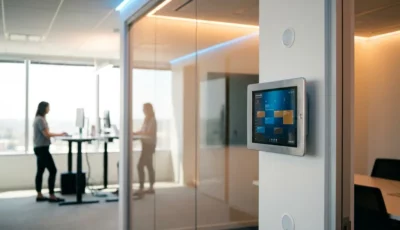
Employee wellbeing in the workplace encompasses the complete physical, mental, emotional, and social health of your workforce. It goes beyond traditional benefits to create environments where people can thrive professionally and personally. Modern workplace wellbeing focuses on reducing stress, promoting work-life balance, and fostering positive experiences that directly impact productivity, retention, and organisational success.
What does employee wellbeing actually mean in today’s workplace?
Employee wellbeing in the workplace represents a holistic approach to supporting your team’s physical health, mental wellness, emotional resilience, and social connections within their work environment. Unlike traditional employee benefits that focus on compensation packages, wellbeing addresses the complete experience of working at your organisation.
The physical dimension includes ergonomic workspaces, air quality, lighting, and access to movement throughout the day. Mental wellbeing covers stress management, cognitive load, and psychological safety. Emotional aspects involve job satisfaction, a sense of purpose, and feeling valued. Social wellbeing encompasses relationships with colleagues, team dynamics, and an inclusive workplace culture.
This comprehensive approach has become a strategic business priority because organisations recognise that employee wellbeing directly influences performance, creativity, and retention. When people feel supported across all these dimensions, they contribute more effectively to business objectives while experiencing greater personal satisfaction in their roles.
Why is employee wellbeing more important now than ever before?
The shift to hybrid and remote work models has fundamentally changed how we think about employee support and workplace satisfaction. Mental health awareness has increased significantly, with employees expecting employers to acknowledge and address workplace stress, burnout, and psychological wellbeing as legitimate business concerns.
Talent retention has become increasingly challenging across industries. Employees now prioritise organisations that demonstrate genuine care for their wellbeing over those offering higher salaries without supportive environments. The connection between employee wellbeing and business performance is now well established, with healthier, happier teams showing measurably better productivity, innovation, and customer service.
The traditional boundaries between work and personal life have blurred, making workplace wellbeing programmes essential for helping employees manage competing demands. Organisations that fail to address wellbeing comprehensively find themselves struggling with higher turnover, increased absenteeism, and reduced team engagement.
What are the key components of a successful workplace wellbeing programme?
Effective workplace wellbeing programmes integrate mental health support, physical wellness resources, work-life balance measures, social connection opportunities, and environmental factors into a cohesive strategy. Mental health support includes access to counselling services, stress management training, and creating psychologically safe environments where employees can discuss challenges openly.
Physical wellness encompasses ergonomic assessments, movement encouragement, healthy eating options, and workspace design that promotes comfort and reduces strain. Work-life balance measures involve flexible working arrangements, reasonable workload management, and respecting boundaries around after-hours communication.
Social connection opportunities focus on team building, mentorship programmes, and creating spaces for informal interaction. Environmental factors include air quality, natural lighting, noise management, and access to quiet spaces for focused work or relaxation. The most successful programmes address all these elements systematically rather than implementing isolated initiatives.
How do you measure employee wellbeing in your organisation?
Measuring employee wellbeing requires combining quantitative metrics with qualitative feedback to understand both current wellbeing levels and trends over time. Regular wellbeing surveys should assess stress levels, job satisfaction, work-life balance, physical comfort, and social connections within the workplace.
Key performance indicators include absenteeism rates, turnover statistics, engagement scores, and productivity measures. However, these traditional metrics should be supplemented with wellbeing-specific indicators such as stress levels, energy levels throughout the day, and satisfaction with the workplace environment and support systems.
Effective measurement involves conducting pulse surveys quarterly, annual comprehensive wellbeing assessments, focus groups, and one-to-one conversations between managers and team members. The data should be analysed to identify patterns, risk areas, and opportunities for improvement, with results communicated transparently to demonstrate organisational commitment to employee wellbeing.
What role does workplace technology play in supporting employee wellbeing?
Smart office technology significantly enhances employee wellbeing by reducing daily friction, providing workspace flexibility, and creating more comfortable work environments. Modern workplace solutions eliminate common stress points like struggling to find available meeting rooms or suitable workspaces, which can negatively impact wellbeing throughout the day.
Desk booking systems with real-time status indicators allow employees to choose workspaces that suit their current activity and preferences, supporting both productivity and comfort. Features like automatic height-adjustment memory ensure immediate personalisation, reducing physical strain and supporting ergonomic wellbeing. Touchscreen devices with “Do Not Disturb” functionality help employees manage interruptions and maintain focus.
Smart office solutions provide valuable workplace analytics that help facility managers optimise environments for wellbeing. Occupancy sensors and usage data enable better space planning, ensuring adequate quiet areas, collaborative spaces, and individual workstations. These integrated platforms create seamless experiences that support both individual wellbeing and organisational efficiency.
How GoBright helps with employee wellbeing
GoBright provides comprehensive smart office solutions that directly address the key factors affecting employee wellbeing in modern workplaces. Our technology creates stress-free workspace experiences while providing valuable insights to optimise your office environment for maximum employee satisfaction.
Our solutions support employee wellbeing through:
- Instant workspace availability – Eliminate frustration from searching for available desks and meeting rooms with real-time booking and status displays
- Personalised workspace settings – Automatic desk height memory and environmental controls ensure immediate comfort and ergonomic support
- Flexible work arrangements – Enable seamless hot-desking and hybrid working patterns that support work-life balance
- Reduced workplace stress – Streamlined check-in processes and clear workspace availability eliminate daily friction points
- Data-driven environment optimisation – Analytics help facility managers create healthier, more comfortable spaces based on actual usage patterns
- Enhanced focus and privacy – “Do Not Disturb” features and workspace zoning support concentration and mental wellbeing
Ready to transform your workplace into an environment that truly supports employee wellbeing? Contact our team to discover how GoBright’s smart office solutions can reduce workplace stress, improve employee satisfaction, and create a more supportive work environment for your organisation.