Organisations everywhere are rethinking how work is done. The rise of hybrid models, changing employee expectations, and digital transformation have reshaped the workplace. At the heart of this evolution is a broader concept: New Ways of Working — often abbreviated as NWoW. But what does that really mean?
What are new ways of working?
New Ways of Working is a collective term for modern work models that focus on flexibility, autonomy, and purpose. It includes approaches like hybrid working, activity-based working, self-organising teams and asynchronous collaboration. These models are not just about location or technology — they represent a shift in mindset: from managing time and presence to enabling output and impact.
While definitions vary, most NWoW concepts are built around a few shared principles: empowering employees, making work more human and purposeful, and aligning space and technology to support performance.
Key characteristics of NWoW
New Ways of Working typically share several core characteristics. First, they offer flexibility in time and place — people are no longer bound to the same desk, hours or building. Second, they are people-centred — giving teams the trust and tools to manage their own work. Third, they are tech-enabled — digital tools and cloud collaboration form the backbone of daily workflows. And finally, they are goal-oriented — measuring success by outcomes rather than activity.
The combination of these factors leads to a workplace where teams can adapt faster, collaborate more intentionally, and find better balance between individual focus and shared goals.
Examples of new ways of working
NWoW is not a single framework, but a collection of models. Some of the most common approaches include:
- Hybrid working: Employees split their time between home and the office, with more autonomy over location and schedule.
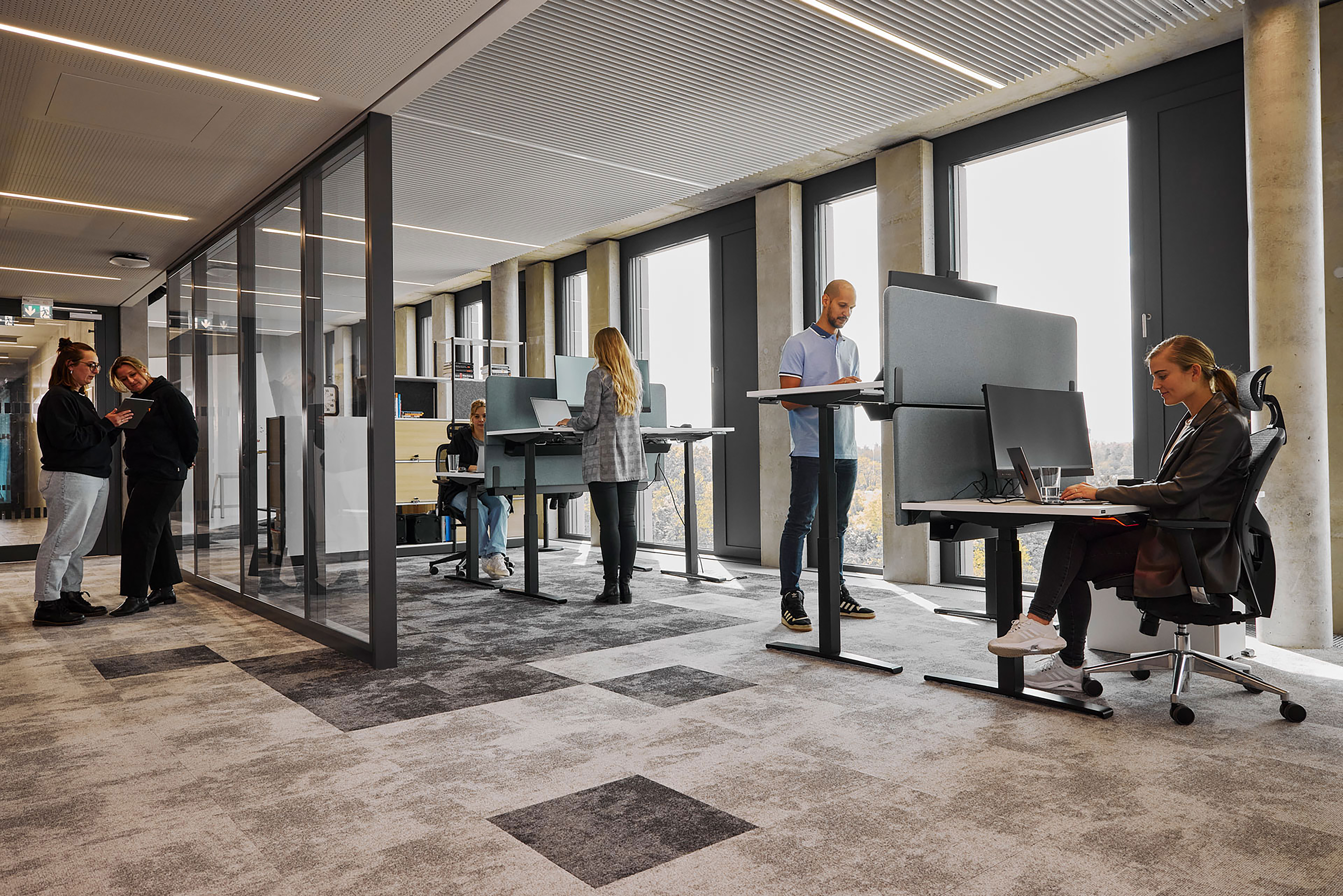
- Activity-based working (ABW): The workplace is divided into zones (e.g. focus, collaboration, social), and employees choose their space based on the task at hand.
- Self-organising teams: Teams plan and execute their work with minimal hierarchy, often using agile methods or shared leadership.
- Asynchronous work: Teams collaborate across time zones and schedules, using digital tools to replace real-time meetings.
Each of these models supports a different aspect of agility, productivity or work-life integration. They can also be combined to suit organisational needs.
Benefits and attention points
When implemented well, new ways of working can increase engagement, attract top talent and improve productivity. Employees gain autonomy and feel more trusted. Teams collaborate more deliberately. And the organisation becomes more resilient to change.
But NWoW also comes with challenges. Without clear frameworks, flexibility can become chaos. Not every employee thrives on autonomy. Managers may struggle to lead without visibility. And digital overload is a real risk if asynchronous tools are poorly introduced.
To succeed, organisations need to balance freedom with clarity — and invest in both mindset and infrastructure.
How to implement a NWoW strategy
Implementing New Ways of Working starts with purpose. Why do you want to change the way you work? Is it to improve employee experience, optimise your real estate, or accelerate decision-making?
From there, involve stakeholders across levels; not just leadership or HR, but also facility, IT and the teams themselves. Assess your current culture and bottlenecks. Pilot new approaches in one department before scaling. And support the shift with the right tools, rituals, and communication.
NWoW is not a plug-and-play template. It’s a process of learning, adjusting and evolving together with your people.
Why new ways of working are here to stay
New Ways of Working is more than a trend. It reflects a deeper shift in how we define work, trust, and collaboration. For organisations willing to rethink not just where people work, but how they work — NWoW offers the space to grow, adapt and lead.