Rückkehr ins Büro
Make the office worth the commute, every day of the week.
- Give employees certainty: a desk, a room and their team, booked before they leave home.
- Spread attendance across the week instead of packing Tuesday and Thursday.
- Base your office strategy on how space is actually used, not on how it is booked.
Return to office has a new meaning
Most organisations have settled the question of whether people come back. Hybrid working is the norm, and three office days a week has become the most common expectation: 89% of employers now require at least three days. The challenge now is different. Employees come in less often than employers ask, and when they do, they all choose the same days.
In the Netherlands, 65% of office staff come in on Tuesday and 63% on Thursday. On Friday, only 19% do. Experts call it the camel problem: two humps of crowded floors, with quiet, half-empty buildings in between. Across Europe, average office utilisation sits at 46% per week, against 71% on peak days.
A successful return to office strategy closes both gaps. It gives people a reason to come in, and it gives your organisation a building that works on every day, not just two.

Why people come to the office
Hybrid working gives organisations the chance to rethink the role of the office. The goal is a workplace that helps people connect, collaborate and do their best work, while keeping the work-life balance hybrid makes possible. That starts with understanding why people come in.
Their colleagues are there
Colleague engagement is the strongest reason people come in. If the team is not there, the trip loses its value.
Collaboration that works better in person
Workshops, onboarding, problem-solving and client meetings benefit from a shared room.
A space that fits the task
A focus room, a well-equipped meeting room or an ergonomic desk that is ready when they arrive.
Certainty before they leave home
Knowing a desk, a room and a parking space are available removes the risk of a wasted journey.
A smooth day in the building
No searching for a free room, no fumbling with technology, no queue at reception for guests.

The "camel" problem: full on Tuesday, empty on Friday
Peak days create two problems at once. On Tuesday and Thursday, employees struggle to find a desk or a meeting room, and the office feels cramped. On Monday, Wednesday and Friday, you heat, light and clean floors that hardly anyone uses. This is not just a Dutch pattern: around 73% of organisations worldwide name Tuesday as their busiest office day.
Mandates alone rarely fix this. Office habits are sticky, and people come in when they expect colleagues to be there. Organisations that flatten the peaks combine clear team agreements with good data and tools that make quieter days just as attractive. Dutch asset manager Van Lanschot Kempen, for example, moved board meetings away from peak days and agreed spread days with its busiest teams. Occupancy is now stable from Monday to Thursday.

How GoBright supports your return to office
GoBright gives you the visibility and the tools to make every office day work.
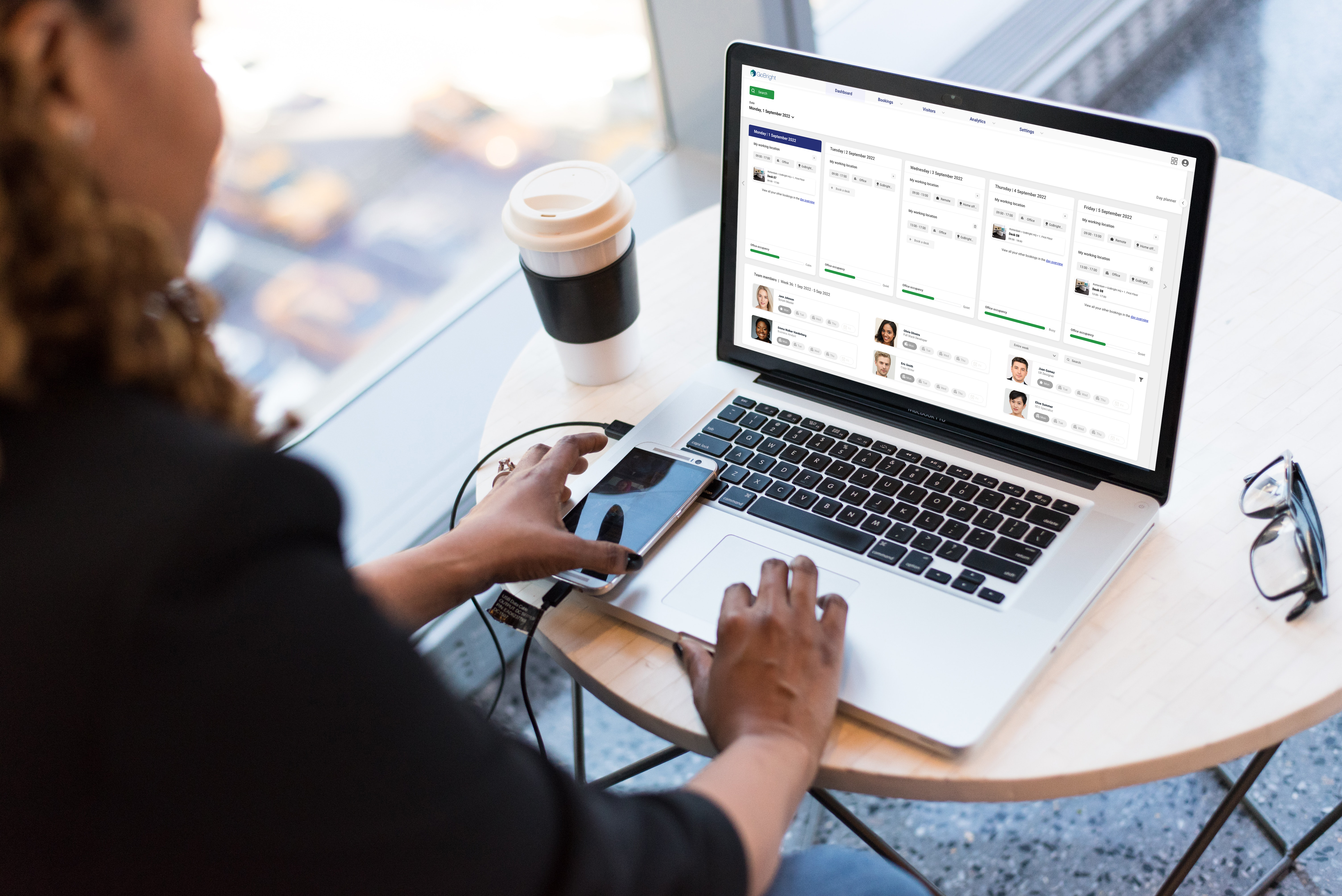
Plan the office day in advance: Employees book a desk, meeting room or parking space from the app, Teams, Outlook or Google Workspace, and see who else is coming in using the week planner.
Make peak days work: Check-in, sensors and automatic release free up desks and rooms that were booked but never used, so ghost bookings no longer block space on your busiest days.
Spread demand across the week: GoBright Analytics shows which days, floors and teams drive the peaks in your office. Use those insights to agree team days and move recurring meetings to quieter days.
Measure what actually happens: Bookings only show intent. By combining booking, sensor and Wi-Fi occupancy data, you get a true picture of how your office is used and lay the foundation for a data-driven workplace. Wi-Fi occupancy runs on your existing network, so you can start a pilot within about a week, without new hardware.
Welcome guests without friction: With Visitor Management, guests pre-register, check themselves in and receive their badge on arrival. It works just as smoothly at a staffed reception as at an unmanned one.
From return to office to the right office
The data you collect for your return to office strategy also answers the bigger questions. How much space do you need? Which floors can you consolidate? Where should you invest in more meeting rooms or focus areas? With evidence from real use, you can reduce real estate and energy costs, align cleaning and facilities with actual occupancy, and design a workplace people choose to visit.
That makes return to office the first step towards Hybrid Working and smarter office space management, not a one-off policy.
Built for enterprise IT
GoBright integrates with Microsoft 365 (including Teams, Outlook and Microsoft Places), Google Workspace and TOPdesk. The platform is ISO 9001, ISO 14001 and ISO 27001 certified and GDPR compliant. Wi-Fi occupancy data is anonymised at source.

How organisations make every office day count

CFC-Risikoprüfung
- Ein zukunftsfähiger Arbeitsplatz mit GoBright Kinly
- eine moderne Unternehmenszentrale, die das weitere Wachstum des Unternehmens unterstützt


Das neue zukunftssichere und nachhaltige Rathaus der fusionierten Gemeinde - Land van Cuijk
- Zusammenführung von fünf Standorten zu einem zukunftssicheren Rathaus
- Optimierung des Arbeitsplatzes durch Verringerung der Anzahl der Schreibtische um 50 % mit Hilfe intelligenter Bürolösungen
- Digital Signage zur Information von Mitarbeitern und Bürgern
Lassen Sie uns gemeinsam Ihren Arbeitsplatz
intelligenter gestalten
Wenden Sie sich an Chris
unser CCO

FAQ
What is a return to office strategy?
How many days a week should employees be in the office?
How do you reduce peak days in the office?
How do you measure office occupancy without installing sensors everywhere?
Lesen Sie unsere neuesten Smart-Office-Ressourcen
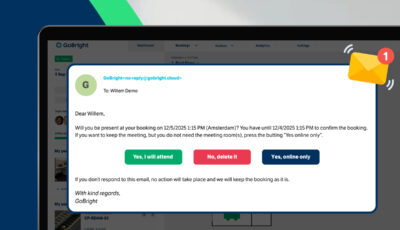
No-shows in meeting rooms: why releasing rooms early makes the difference

Nehmen Sie an unserem "Bright NEW Features Webinar" teil

GoBright auf dem AVTECH Summit 2026

GoBright Advanced Gateway (AGW): ein einfacheres, sichereres Sensornetzwerk
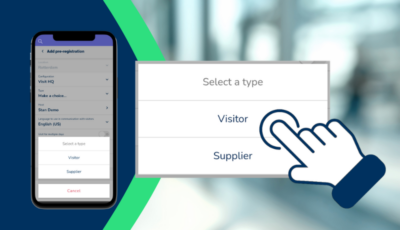
Voranmeldung und Verwaltung von Besuchern über die mobile App „ GoBright “

Das hybride Arbeitsmodell: Arten, Vorteile und Beispiele

GoBright auf der Orgatec 2026

GoBright auf der Expo Real 2026
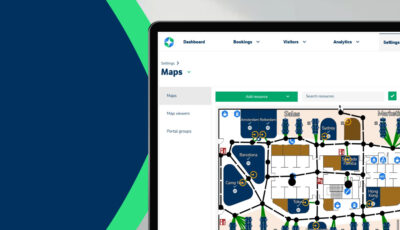
Karteneditor: Zeichnen Sie Ihre eigenen Grundrisse

GoBright der PropTech Connect 2026