Hybrid working has changed the way we think about office space — and how we use it. Gone are the days when desks were assigned, meeting rooms fully booked, and occupancy was a constant. Today, offices are dynamic, unpredictable, and often underused. But how underused exactly? And what should you do when occupancy drops?
What is office occupancy and why does it matter more than ever?
Office occupancy refers to how much of your office space is actually being used — typically measured as a percentage of available desks or rooms that are occupied at a given time. It’s typically calculated by dividing the number of occupied workspaces by the total available, then multiplying by 100. For example, if 60 out of 100 desks are in use, your occupancy rate is 60%.
Before 2020, office occupancy in most corporate environments hovered between 60% and 80%, depending on the day. Post-pandemic, that number has dropped significantly. Many UK offices now operate at an average occupancy of 30–50%, with peaks on Tuesdays and Thursdays and near-empty spaces on Mondays and Fridays.
This shift isn’t just about numbers. It affects how you plan space, allocate budgets, and support teams. Underused offices mean wasted resources — but also missed opportunities to adapt your workplace to how people actually work today.
UK office occupancy trends of 2025
Recent studies show that UK office occupancy is still far from pre-pandemic levels. According to CBRE’s UK Office Occupier Sentiment Survey 2024, average occupancy currently sits between 45% and 55%. Offices tend to be busiest on Tuesdays and Wednesdays, with some reaching up to 80% capacity, while Fridays consistently remain quiet, often with less than 20% occupancy.
Additional data from the Leesman Index confirms that these fluctuations are particularly evident in sectors like tech and professional services, where hybrid working is more deeply embedded. Finance and legal sectors tend to show a slightly higher physical presence, but the midweek spike is visible across industries.
At GoBright, we observe similar usage patterns across our customer base. Spaces or overused/constricted are rarely at full occupancy capacity. Instead, occupancy fluctuates in waves depending on collaboration needs, leadership presence or internal culture. Understanding these rhythms is essential for more effective space planning.
How to respond to low office occupancy
A low occupancy rate isn’t just a facility issue — it’s a strategic challenge. The good news? It also creates opportunities to rethink and redesign the way your space works.
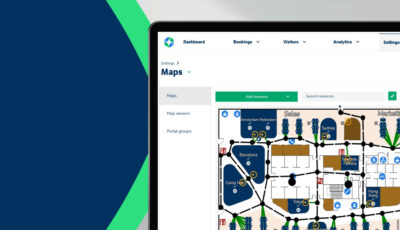
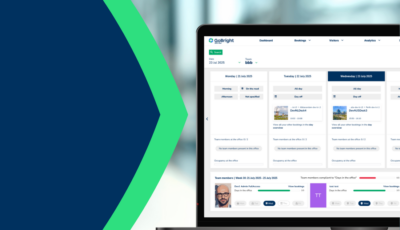
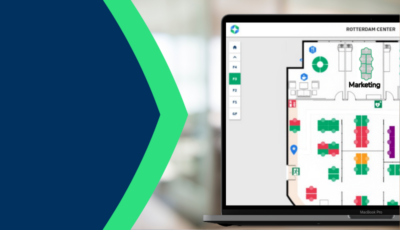
Start by collecting occupancy data. How often are desks booked but left empty? Which rooms are overused or underutilised? With smart workplace tools — like GoBright’s desk and room booking, occupancy sensors, and analytics dashboards — you can spot trends and act on them.
Responding effectively means adjusting your space to fit actual behaviour. Offices can be consolidated based on usage, or redesigned to support more informal interaction and focus work. Booking nudges and visual tools help spread occupancy more evenly across the week. And in some cases, it’s possible to reduce square metres altogether — without compromising availability or experience.
The benefits of a smart workplace strategy
Organisations that act on occupancy data unlock more than just space efficiency. Lower real estate costs are an obvious benefit, but there’s more at stake. When space is better aligned to real usage, employees experience fewer frustrations and more autonomy. Collaboration improves, because people know who’s in and where to find each other. Leadership gains visibility, which allows decisions to be based on actual behaviour — not gut feeling or outdated assumptions. And as your organisation grows or shifts, agile use of space makes scaling simpler and less disruptive.
Ultimately, smart occupancy management turns your workplace into a living asset — one that adapts to people, not the other way around.
Final thought
Office occupancy is no longer just a number — it’s a reflection of your workplace’s relevance. In a hybrid world, the smartest offices are the ones that learn, adapt and evolve. And it all starts with knowing how your space is being used.
Want to learn how to apply occupancy data to redesign your office? Explore this article on data-driven office design.