What is a Hybrid Work Model? Types, Benefits and Solutions
Hybrid working is no longer a temporary fix. It is how most organisations now structure work, and it has permanently changed how offices are used, booked and managed. But “hybrid” means different things to different companies, and choosing the wrong model, or running it without the right tools, creates more problems than it solves.
This article explains what a hybrid work model is, the main types in use today, their benefits and challenges, and what facility managers and executives need in place to make hybrid working actually work.
What is a hybrid work model?
A hybrid work model is a way of working that combines time in the office with time working remotely. Employees split their week between the two, rather than being in one location full-time.
What are the different types of hybrid work models?
There is no single hybrid workplace model. Most organisations choose one of the following, or blend elements of several. Understanding the differences is the first step in deciding which fits your organisation.
Fixed-schedule hybrid The company sets specific in-office days for all or most employees, for example Tuesday to Thursday in the office, with Monday and Friday remote. This is one of the most common hybrid working examples, and it works well because it guarantees overlap between colleagues without requiring day-to-day coordination.
Office-first, remote-flexible Employees are expected in the office most of the week, with remote work reserved for specific circumstances or a limited number of days. This model prioritises in-person collaboration and suits organisations with client-facing roles or strong on-site culture.
Remote-first, office-optional The default is remote work, and the office is used for meetings, onboarding or specific collaborative sessions rather than daily work. This suits distributed teams or organisations prioritising talent access over location.
Week-by-week or rotating hybrid Teams alternate between remote and in-office weeks, often used by project-based teams who need dedicated in-person sprints alongside independent work periods.
At-will hybrid Employees decide when to come in and when to work remotely, based on their own schedule and workload. This offers the most flexibility but relies heavily on trust, clear expectations and good visibility into who is where.
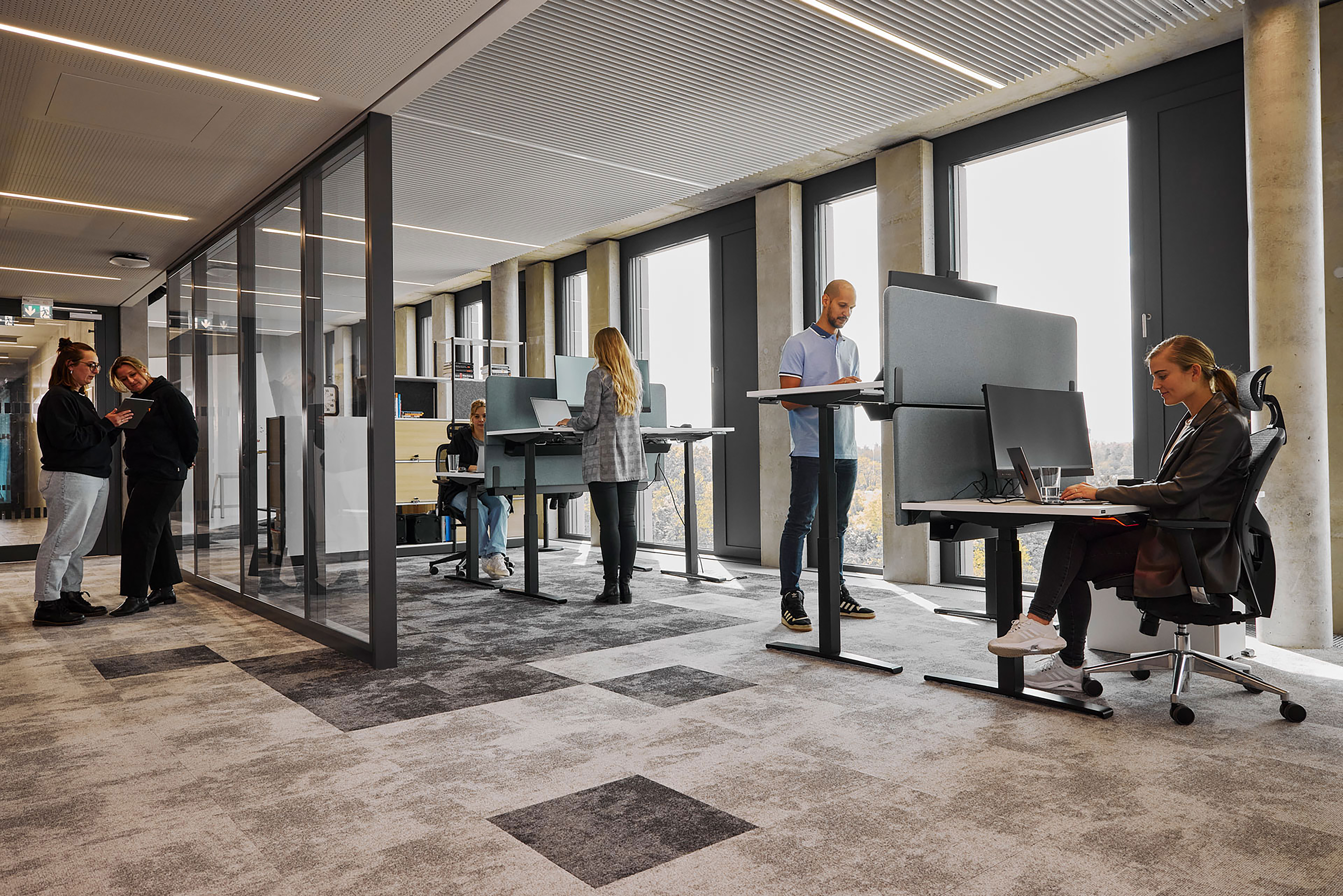
Activity based working (ABW) Rather than fixing days or locations, activity based working (ABW) lets employees choose where and how they work based on the task at hand: a quiet desk for focused work, a meeting room for collaboration, or a break-out area for informal discussion. ABW is increasingly common within hybrid models, since it applies the same flexible logic to the office itself, not just to whether someone is in the building at all. It is one of the more advanced hybrid workplace models, and it depends on real-time visibility into what space is available and where.
Hybrid work model examples
The table below sets out how these models typically look in practice, and the type of organisation each tends to suit.
| Model | How it works | Best suited to |
| Fixed-schedule hybrid | Set office days for the whole team or company | Organisations wanting guaranteed in-person overlap |
| Office-first, remote-flexible | Office is the default; remote work is the exception | Client-facing teams, strong on-site culture |
| Remote-first, office-optional | Remote is the default; office used for specific purposes | Distributed or geographically spread teams |
| Week-by-week rotation | Alternating remote and in-office weeks | Project-based or cross-location teams |
| At-will hybrid | Employees choose their own in-office days | Organisations with high trust and mature booking systems |
| Activity based working (ABW) | Space is chosen by task, not by fixed desk or day | Organisations optimising both flexibility and space efficiency |
These hybrid office examples are not mutually exclusive. Many organisations combine a fixed-schedule baseline (say, three anchor days) with ABW principles once employees are in the building, giving structure at the policy level and flexibility at the space level.
Benefits of a hybrid work model
The business case for hybrid working is well established, and the benefits apply differently depending on who you ask.
For the organisation
- Lower real estate costs. Fewer employees on-site at any one time means office space can be optimised rather than sized for full attendance.
- Better space utilisation. Desks and meeting rooms are used more efficiently when booking and occupancy data inform planning decisions.
- Wider talent pool. Location becomes less of a constraint on hiring, and flexibility is now a significant factor in attracting and retaining staff.
- Data-driven decisions. Booking and occupancy data give facility and operations teams evidence for real estate and layout decisions, rather than relying on assumptions.
For employees
- Improved work-life balance. Less time commuting and more control over the working day.
- Choice of environment. Employees can match their location to the task, whether that is focused remote work or collaborative time in the office.
- Stronger engagement when done well. Predictable in-office days make it easier to plan around colleagues, meetings and social contact.
Challenges of a hybrid work model
Hybrid working also introduces real operational challenges, particularly for facility and IT teams managing the physical office.
Underused and unevenly distributed space. Office occupancy after the shift to hybrid working often sits well below capacity, with sharp peaks on certain days and near-empty floors on others. Without real-time insight, it is difficult to right-size space or plan layouts around actual demand.
Ghost meetings and room conflicts. Meeting rooms get booked and never used, or double-booked across systems, while employees waste time hunting for a free space. This is a direct cost, in lost time and in rooms sitting idle while demand goes unmet elsewhere.
Lack of visibility. Employees often do not know who else is coming in on a given day, which undermines the spontaneous collaboration hybrid working is supposed to support. Facility teams face the same problem at a larger scale: no clear, real-time view of how the building is actually used.
Fragmented tools. Calendars, booking systems and building infrastructure often do not talk to each other, creating extra administrative work for IT and inconsistent experiences for employees.

What is the best hybrid working model?
There is no single best hybrid work model. The right choice depends on the organisation’s culture, the nature of the work, and how much structure versus flexibility employees need. A fixed-schedule model suits organisations that need guaranteed in-person overlap; an at-will or ABW-based model suits those with high trust and more variable work patterns.
What matters more than the specific model is having the tools to support it. Any hybrid model, however structured or flexible, depends on employees being able to see and book what they need, and on facility teams having accurate data on how space is actually used. Without that, even a well-designed policy breaks down in practice.
Solutions: making hybrid working work in practice
Most of the challenges above come down to one issue: a lack of real-time visibility into people, space and bookings. Addressing that requires the right combination of technology and process.
- Room and desk booking. A central booking system removes the guesswork from finding a desk or meeting room, and reduces double bookings and no-shows. Automated check-in and release features free up space that would otherwise sit blocked but unused; see how this works in GoBright’s room booking and desk booking systems.
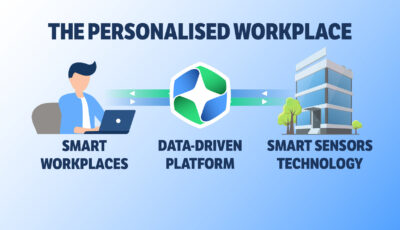
- Occupancy and space data. Sensor and booking data together give facility teams an accurate, ongoing picture of how space is actually used, rather than how it was assumed to be used. GoBright’s data-driven workplace approach turns this into decisions about layout, capacity and real estate.
- Activity based working support. For organisations adopting ABW, the office itself needs to flex with demand: hot-desking and hoteling tools let employees find and reserve the right type of space for the task at hand.
- Integration with existing systems. Hybrid tools need to work with the calendars and platforms employees already use, not add another disconnected system. GoBright’s approach to hybrid working and smart office management is built around this kind of integration, so booking and space data sit inside the existing workflow rather than outside it.
What is an example of a hybrid working contract?
A hybrid working contract typically sets out the agreed balance between office and remote work; for example, a minimum number of in-office days per week, which days (if any) are fixed, and how remote work is expected to be logged or communicated. It may also cover equipment provided for remote work, expectations around availability and core hours, and how performance is measured when staff are not on-site full-time. The specifics vary by organisation and jurisdiction, so the contract should reflect the company’s chosen hybrid model rather than a generic template.
The 5 C’s of hybrid work
Some organisations use the “5 C’s” as a simple framework for assessing hybrid work strategy:
- Communication — keeping remote and in-office employees equally informed.
- Collaboration — ensuring teams can work together effectively regardless of location.
- Culture — maintaining a consistent company culture across hybrid teams.
- Connection — helping employees feel connected to colleagues and the organisation.
- Consistency — applying hybrid policies fairly and predictably across teams.
These principles are useful as a checklist when designing or reviewing a hybrid policy, but they work best alongside the practical infrastructure, booking systems, occupancy data and clear space management, that turns the policy into a workable day-to-day experience.
Getting hybrid working right
A hybrid work model only delivers its benefits, cost savings, flexibility and better space usage, when it is backed by clear visibility into how the office is actually used. That means combining the right policy with the right tools: booking systems, occupancy data and space management that give both employees and facility teams the information they need to make hybrid working work.
If you are reviewing your organisation’s hybrid strategy, explore how GoBright’s smart office and hybrid working solutions bring booking, occupancy and space data together in one platform.