Smart office infrastructure costs in 2026 range from £15–50 per desk monthly for basic solutions to £100–200+ for comprehensive enterprise platforms. Investment varies significantly based on organisation size, feature requirements, and implementation complexity. Most organisations budget 2–5% of their annual facility costs for smart office transformation, with typical ROI achieved within 18–24 months through improved space utilisation and operational efficiency.
What exactly counts as smart office infrastructure in 2026?
Smart office infrastructure encompasses integrated technology systems that automate workplace management, optimise space utilisation, and enhance the employee experience through data-driven insights. Core components include desk and room booking platforms, visitor management systems, digital signage networks, IoT sensors, and unified workplace management platforms that connect all these elements.
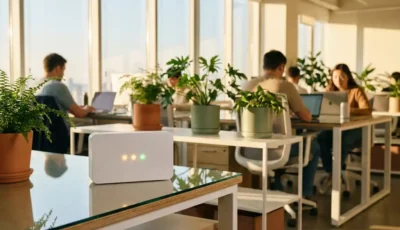
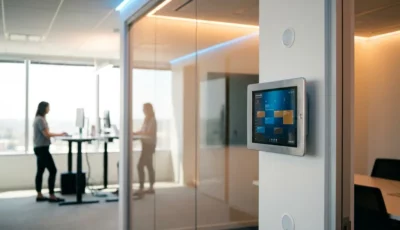
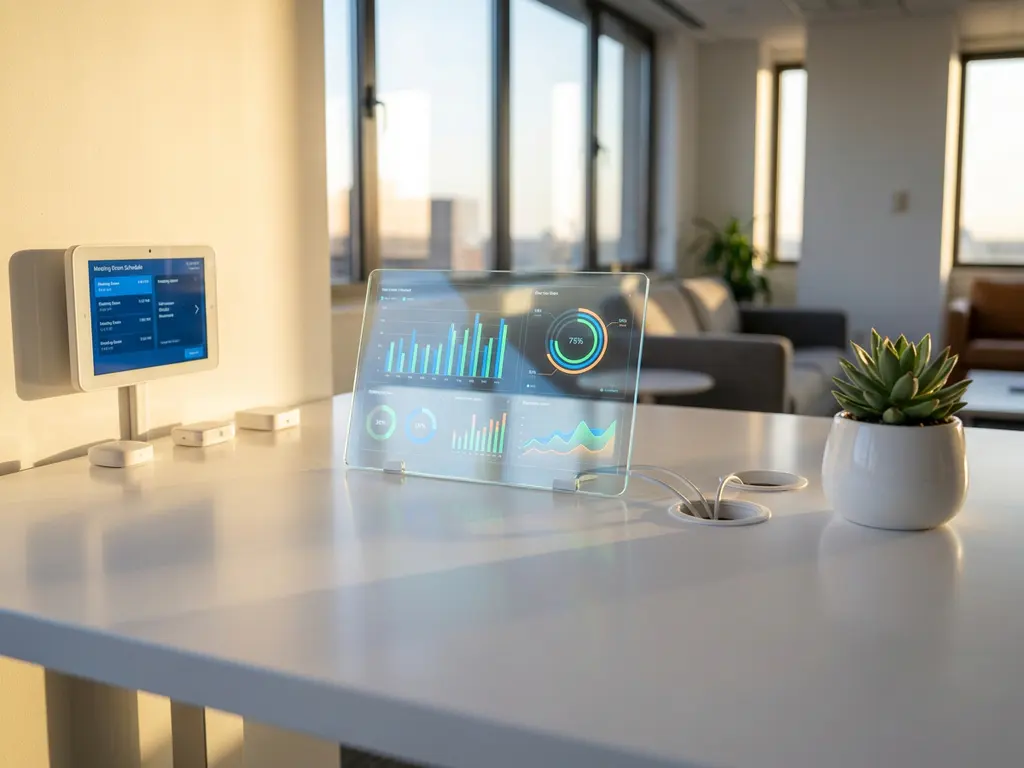
The technology landscape has evolved significantly, with modern smart office solutions focusing on seamless integration rather than standalone tools. Essential components now include touchscreen booking devices such as interactive panels that support real-time status updates, occupancy sensors that provide accurate usage data, and mobile applications that allow employees to manage their entire workday from a single platform.
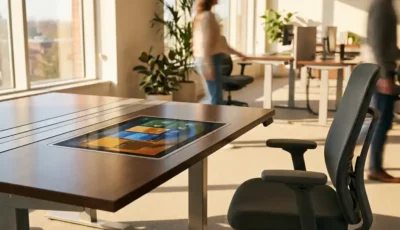
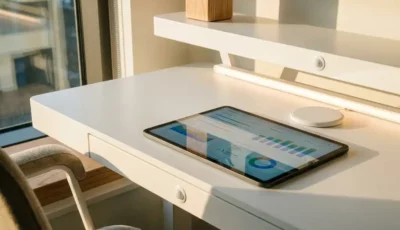
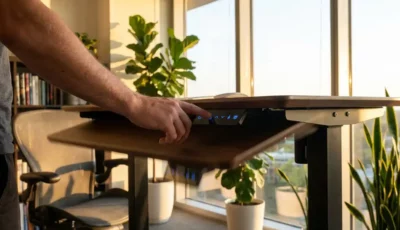
Essential infrastructure typically includes desk booking systems with height-adjustable memory functions, room management technology with calendar integrations, and visitor management platforms with self-service check-in capabilities. Optional but increasingly popular additions include smart parking management, advanced analytics dashboards, and environmental monitoring systems that track air quality and temperature.
The distinction between essential and optional components often depends on your organisation’s hybrid work model maturity. Companies with established flexible working patterns prioritise comprehensive booking systems and analytics, while organisations beginning their smart office transformation may start with basic room booking and visitor management before expanding to desk-level management and advanced monitoring capabilities.
How much should you budget for smart office technology implementation?
Budget allocation for smart office technology ranges from £15,000–50,000 for small offices (50–100 desks) to £200,000–500,000+ for enterprise deployments (1,000+ workstations). Initial setup costs typically represent 40–60% of first-year expenses, with ongoing licensing, maintenance, and support comprising the remainder.
Small organisations (50–200 desks) should budget £25–75 per desk monthly for comprehensive solutions, including hardware, software licensing, and basic support. Mid-size companies (200–500 desks) often achieve better economies of scale, with costs ranging from £40–100 per desk monthly for advanced features like occupancy analytics and integrated workplace platforms.
Enterprise deployments require larger upfront investments but benefit from volume pricing and advanced customisation options. Hardware costs vary significantly based on device sophistication, with basic booking panels starting at around £300–500 per unit, while advanced touchscreen devices with height adjustment memory and sensor integration can cost £800–1,500 per installation.
Implementation services typically add 20–40% to hardware and software costs, covering system configuration, integration with existing tools such as Microsoft 365 or Google Workspace, staff training, and initial optimisation. Factor in additional costs for network infrastructure upgrades, particularly if deploying Power-over-Ethernet devices or extensive sensor networks throughout your facility.
What’s the difference between licensing per user versus per desk pricing models?
Per-desk pricing charges based on physical workspace capacity regardless of actual usage, while per-user models charge for each individual who can access the system. Per-desk pricing typically costs £15–40 monthly per workspace, whereas per-user pricing ranges from £8–25 monthly per employee but can become expensive with large teams.
Per-desk pricing works particularly well for organisations with established desk-sharing or activity-based working models, where multiple employees use the same workspace throughout the week. This model provides predictable budgeting based on your physical office capacity rather than fluctuating headcount, making it ideal for companies with seasonal staffing or contractor usage.
Per-user pricing suits organisations where most employees have assigned workspaces or where system usage is limited to specific departments. However, this model can become costly when scaling to large teams, particularly if you need to account for visitors, contractors, or temporary staff who require occasional system access.
Hybrid pricing models are becoming increasingly popular, combining base per-desk charges for core functionality with per-user fees for advanced features such as mobile applications or analytics access. We often recommend per-desk pricing for comprehensive workplace management solutions because it aligns costs with actual space utilisation rather than theoretical user counts, providing better value for organisations embracing flexible working patterns.
How do you calculate the ROI of smart office infrastructure investments?
Smart office ROI calculation involves measuring space utilisation improvements, energy savings, productivity gains, and operational cost reductions against total technology investment. Most organisations achieve a positive ROI within 18–24 months through 15–30% improvements in space efficiency, reduced facility management overhead, and enhanced employee satisfaction metrics.
Space utilisation improvements typically provide the largest ROI component. Track occupancy data before and after implementation to quantify efficiency gains. If smart office technology helps you avoid expanding into additional office space or enables downsizing, calculate the annual rent savings per square metre. Many organisations discover they can reduce office footprint by 20–40% while maintaining employee satisfaction through better space management.
Energy savings contribute significantly to ROI through automated power management and occupancy-based environmental controls. Smart power plugs that activate only during check-in can save approximately £24 per desk annually by eliminating standby power consumption. Environmental systems that adjust heating, cooling, and lighting based on actual occupancy can reduce energy costs by 10–25%.
Operational efficiency gains include reduced facility management time spent on space allocation, visitor processing, and maintenance coordination. Quantify time savings from automated booking systems, streamlined visitor management, and data-driven cleaning schedules. Factor in improved employee productivity from reduced time spent searching for meeting rooms or available desks, though these soft benefits can be challenging to measure precisely.
Track metrics consistently over 12–18 months to establish reliable ROI calculations. Include both hard savings (reduced rent, energy costs, staffing) and soft benefits (employee satisfaction, operational efficiency) to build a comprehensive business case. For specific guidance on implementing smart office infrastructure within your budget, contact our team to discuss your requirements. Remember that smart office infrastructure often enables broader workplace transformation initiatives that generate additional value beyond the immediate technology investment.
How GoBright helps with smart office infrastructure costs
GoBright provides cost-effective smart office solutions that deliver maximum ROI through transparent per-desk pricing and comprehensive functionality. Our integrated platform eliminates the need for multiple vendors while providing predictable costs that scale with your workspace requirements.
GoBright’s smart office infrastructure delivers exceptional value through:
- Unified platform approach – Combining desk booking, room management, visitor systems, and analytics in one solution to reduce complexity and licensing costs
- Transparent per-desk pricing – Predictable monthly costs from £25–45 per workspace, including hardware, software, and support
- Rapid deployment – Pre-configured systems that reduce implementation time and costs by up to 40% compared to custom solutions
- Seamless integrations – Native connectivity with Microsoft 365, Google Workspace, and major facility management systems
- Proven ROI delivery – Average space utilisation improvements of 25–35% within six months of implementation
Ready to transform your workplace with cost-effective smart office infrastructure? Contact GoBright today to schedule a consultation and receive a customised pricing proposal for your organisation.