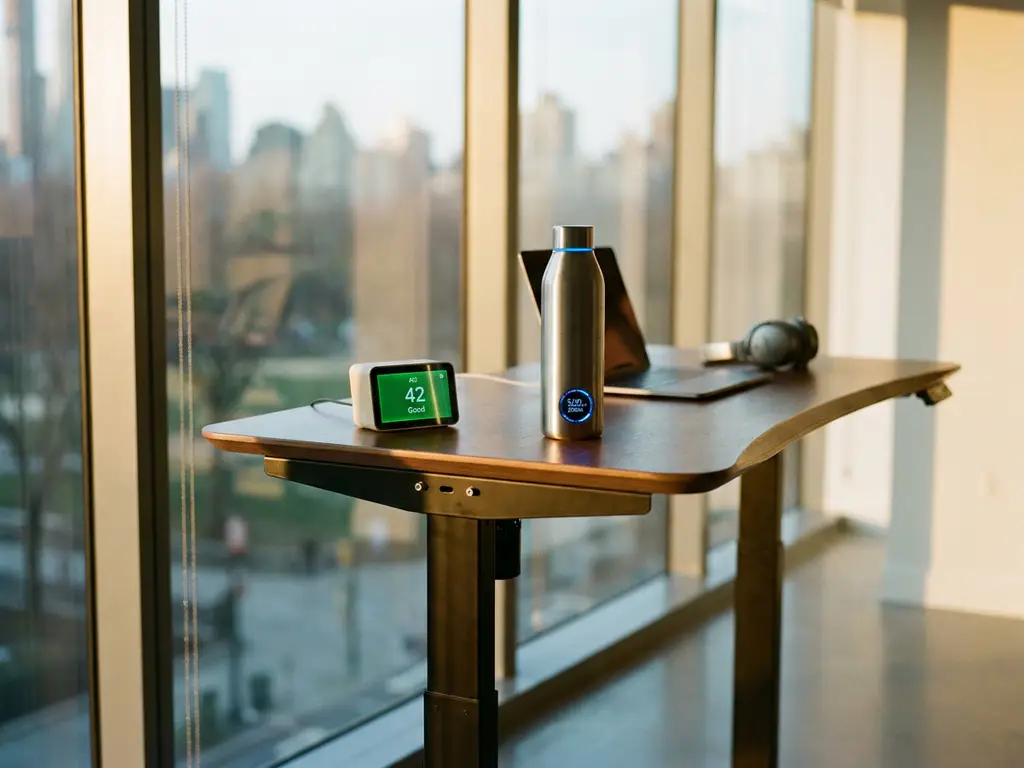
What are smart office solutions and how do they impact employee health?
Smart office solutions are integrated technology systems that use sensors, automation, and data analytics to create responsive work environments that adapt to employee needs and preferences. These systems directly impact employee health by continuously monitoring and adjusting environmental factors such as air quality, lighting, temperature, and noise levels that affect physical comfort and cognitive performance.
The connection between intelligent workplace systems and employee wellbeing extends beyond basic comfort. Environmental controls help reduce eye strain, improve respiratory health, and support natural circadian rhythms. Ergonomic features, such as automated desk height adjustments that remember personal preferences, promote better posture and reduce musculoskeletal problems.
Smart office technology also addresses mental health through predictability and control. When employees can easily find and personalise their workspace, book meeting rooms without friction, and work in consistently comfortable conditions, workplace stress decreases significantly. Real-time status indicators and intuitive booking systems eliminate uncertainty about space availability, creating a calmer work environment.
Wellness monitoring capabilities provide facility managers with data-driven insights into how environmental factors affect productivity and comfort. This enables proactive adjustments to create optimal conditions before problems arise, supporting both immediate comfort and long-term health outcomes.
Which smart office features have the biggest impact on workplace wellness?
Air quality monitoring systems have the most significant impact on workplace wellness, followed by intelligent lighting controls, temperature management, and ergonomic workspace solutions. These features work together to create environments that support both physical health and cognitive performance throughout the workday.
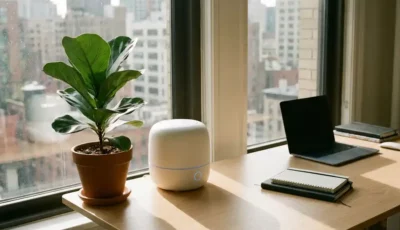
Air quality monitoring with automated ventilation controls maintains optimal oxygen levels and removes pollutants that cause fatigue, headaches, and respiratory issues. IoT sensors continuously track CO2 levels, humidity, and airborne particles, automatically adjusting ventilation systems to maintain healthy air quality.
Intelligent lighting systems that adjust throughout the day support natural circadian rhythms, reducing eye strain and improving sleep quality. These systems automatically balance artificial light with available daylight, creating consistent illumination that adapts to different work activities.
Temperature control systems that respond to occupancy and personal preferences maintain comfort zones that support productivity. Smart thermostats learn usage patterns and adjust heating and cooling to prevent the temperature fluctuations that commonly cause discomfort and distraction.
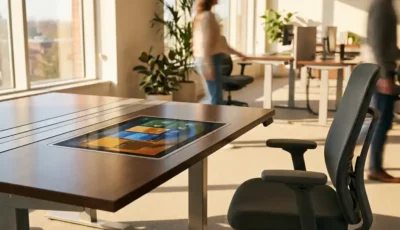
Ergonomic workspace solutions, including height-adjustable desks with memory settings, promote better posture and reduce physical strain. Interactive touchscreen devices can store personal height preferences, automatically adjusting workstations when employees check in to their reserved desks.
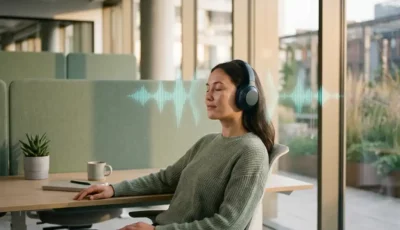
Noise management through sound masking and acoustic monitoring helps maintain concentration levels and reduces stress from disruptive audio environments.
How do smart office solutions monitor and improve indoor air quality?
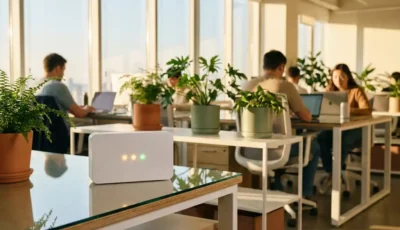
Smart office solutions use IoT sensors to continuously monitor CO2 levels, humidity, temperature, and airborne pollutants, then automatically adjust ventilation systems to maintain optimal air quality. These systems track multiple air quality parameters in real time and integrate with building management systems to make immediate corrections when levels fall outside healthy ranges.
Advanced sensor networks measure particulate matter, volatile organic compounds, and carbon dioxide concentrations throughout the workspace. When CO2 levels rise above 800–1000 parts per million, indicating poor ventilation, the system automatically increases fresh air intake to prevent the drowsiness and reduced cognitive performance associated with poor air quality.
Humidity control prevents both the dry air that causes respiratory irritation and the excess moisture that promotes mould growth. Smart systems maintain humidity levels between 40–60%, the optimal range for human comfort and health.
Automated ventilation controls respond to occupancy data, increasing air circulation when more people are present and reducing energy consumption during low-occupancy periods. This ensures an adequate fresh air supply while maintaining efficiency.
Real-time air quality dashboards provide facility managers with immediate visibility into environmental conditions across different zones. This enables targeted interventions and helps identify areas that may need additional ventilation or filtration.
Integration with booking systems allows the technology to precondition spaces before scheduled meetings, ensuring optimal air quality when employees arrive. This proactive approach prevents the stuffiness and discomfort that often develop in closed meeting rooms.
What role does smart lighting play in employee health and productivity?
Smart lighting systems support employee health by automatically adjusting colour temperature and intensity throughout the day to align with natural circadian rhythms, reducing eye strain and improving sleep quality. These systems provide bright, blue-rich light in the morning to promote alertness and gradually shift to warmer tones in the afternoon to support natural wind-down processes.
Circadian rhythm lighting helps regulate the body’s internal clock by mimicking natural sunlight patterns. This supports better sleep at night, improved mood, and enhanced cognitive performance during work hours. Studies show that proper light exposure during the day helps employees feel more energised and focused.
Automated daylight harvesting systems measure available natural light and adjust artificial lighting accordingly. This maintains consistent illumination levels while reducing energy consumption and preventing the harsh contrasts that cause eye fatigue.
Personalised lighting controls allow employees to adjust their immediate work area lighting based on tasks and preferences. Brighter light supports detailed work and reading, while softer illumination is better for computer work and collaborative activities.
Glare reduction through automated blinds and light positioning prevents the eye strain and headaches associated with excessive brightness or poor light placement. Smart systems detect glare conditions and make adjustments to maintain visual comfort.
Task-specific lighting that adapts to different work activities optimises visual conditions throughout the day. The system can provide focused illumination for detailed work and broader, softer light for meetings and collaborative spaces.
How can smart office technology reduce workplace stress and support mental health?
Smart office technology reduces workplace stress by eliminating common friction points such as finding available spaces, adjusting workspace settings, and navigating building systems. Predictable, responsive environments that adapt to employee needs create a sense of control and comfort that significantly supports mental wellbeing.
Intuitive booking platforms with real-time availability reduce the anxiety and time wasted searching for meeting rooms or desks. When employees can easily reserve spaces and trust that their bookings will be honoured, daily stress levels decrease considerably.
Noise management systems use acoustic sensors to monitor sound levels and automatically adjust sound masking or alert facility managers to disruptive conditions. Consistent, comfortable audio environments support concentration and reduce the stress caused by unpredictable noise.
Personalised workspace settings that remember individual preferences create immediate comfort and familiarity. When desk heights, lighting levels, and environmental controls automatically adjust to personal settings upon check-in, employees feel more settled and productive.
Space utilisation analytics help prevent overcrowding and ensure adequate quiet zones are available when needed. This supports different work styles and provides options for employees who need calmer environments during stressful periods.
Wayfinding systems and clear digital signage reduce navigation stress, which is particularly important for new employees or visitors. When people can easily find their destinations, overall workplace anxiety decreases.
Environmental consistency through automated controls ensures that temperature, lighting, and air quality remain stable throughout the day. This predictability allows employees to focus on their work rather than adjusting to changing conditions, supporting sustained concentration and reduced stress.
How GoBright helps with smart office solutions for employee health
GoBright provides comprehensive smart office solutions that directly address employee health and wellbeing through integrated environmental monitoring, space management, and workplace optimisation tools. Our platform combines IoT sensors, intelligent booking systems, and data analytics to create healthier, more comfortable work environments that support both physical and mental wellness.
Our solutions deliver measurable health benefits through:
- Environmental monitoring: Real-time air quality, temperature, and lighting sensors that automatically adjust conditions to maintain optimal wellness standards
- Stress-free space management: Intuitive booking platforms and wayfinding systems that eliminate workplace friction and reduce daily stress
- Personalised workspace controls: Automated desk height adjustments, lighting preferences, and environmental settings that remember individual employee needs
- Health analytics: Comprehensive dashboards that track wellness metrics and provide insights for continuous workplace improvement
- Seamless integrations: Compatible with existing building management systems to enhance rather than replace current infrastructure
Ready to create a healthier workplace that supports your team’s wellbeing and productivity? Contact GoBright today to discover how our smart office solutions can transform your work environment and improve employee health outcomes.