Smart office technology directly improves work-life balance by reducing workplace stress, supporting flexible schedules, and creating environments where employees can focus effectively. Key features include flexible desk booking systems, automated environmental controls, occupancy sensors, and analytics platforms that help organizations make data-driven decisions about workplace policies. These technologies eliminate common frustrations while enabling better time management and work flexibility.
What smart office features directly impact employee work-life balance?
Smart office features that most significantly impact work-life balance include flexible workspace booking systems, automated environmental controls, occupancy sensors, and integrated digital platforms. These technologies reduce daily workplace friction by eliminating time spent searching for desks, managing uncomfortable environments, or navigating complex booking processes.
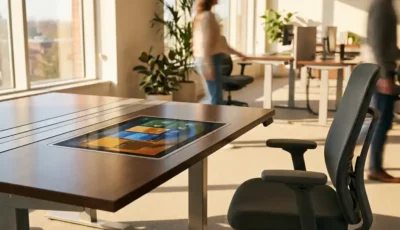
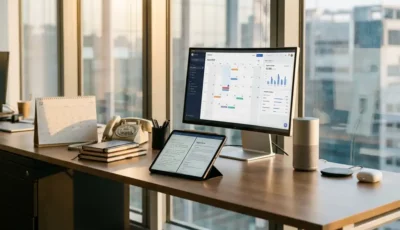
Desk booking systems with real-time availability allow employees to plan their workday efficiently, supporting hybrid work models where people split time between home and office. When combined with height-adjustable desks that remember personal preferences, employees can focus immediately on work rather than workspace setup. Interactive touchscreen devices enable instant check-ins and status updates, while occupancy sensors provide accurate data about space usage without requiring manual intervention.
Environmental automation plays a crucial role in employee well-being in the workplace. Smart lighting systems adjust throughout the day to support natural circadian rhythms, while climate controls maintain optimal temperatures automatically. These features reduce the mental load of managing physical comfort, allowing employees to concentrate on their tasks rather than environmental distractions.
Digital signage and wayfinding systems eliminate navigation stress in large offices, while visitor management platforms reduce interruptions for employees by streamlining guest arrivals. When these features work together through a unified platform, they create a seamless workplace experience that supports both productivity and personal well-being.
How does flexible desk booking technology reduce workplace stress?
Flexible desk booking technology eliminates the daily uncertainty and frustration of finding available workspace, particularly in hybrid work environments. Employees can reserve desks in advance through mobile apps or desktop platforms, ensuring they have a guaranteed workspace when they arrive at the office.
The stress reduction comes from predictability and control over the work environment. Rather than arriving at the office unsure whether suitable workspace will be available, employees can plan their entire workday knowing exactly where they’ll be working. This is particularly valuable for those who need specific equipment, prefer certain locations, or want to coordinate with colleagues.
Real-time status indicators show desk availability instantly, while integrations with calendar systems allow employees to book workspace alongside meeting rooms. Some systems include features like height preference memory for sit-stand desks, meaning the workspace adjusts automatically to personal ergonomic settings upon check-in. This eliminates the daily task of readjusting equipment and creates immediate comfort.
Collaboration planning becomes significantly easier when employees can see where colleagues are working and book nearby desks accordingly. This supports both planned teamwork and spontaneous collaboration while respecting individual preferences for focused work periods. The technology also enables “Do Not Disturb” features, helping employees signal when they need uninterrupted time.
For hybrid workers, booking systems provide the flexibility to choose office days based on workspace availability, meeting schedules, and collaboration needs. This level of control over when and where to work significantly reduces the stress associated with rigid office requirements while maintaining the benefits of in-person collaboration.
Which automated office systems help employees focus better during work hours?
Automated lighting, climate control, noise management, and room booking systems create optimal work environments that minimize distractions and support sustained focus. These systems work in the background, automatically adjusting conditions without requiring employee attention or intervention.
Smart lighting systems adjust color temperature and brightness throughout the day to support natural energy levels and reduce eye strain. Cooler light in the morning helps with alertness, while warmer tones later in the day prevent disruption to sleep patterns. Automated adjustment means employees don’t need to think about lighting conditions, allowing them to maintain focus on their work.
Climate control systems maintain consistent temperatures and air quality, eliminating the common workplace distraction of being too hot or cold. Occupancy sensors help these systems respond to actual usage rather than schedules, ensuring comfort when spaces are occupied while saving energy when they’re empty.
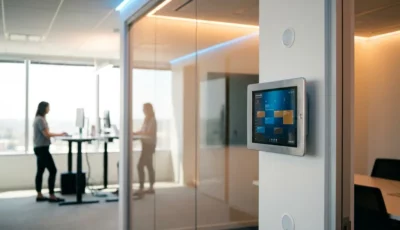
Room booking systems with automated availability updates prevent the frustration of arriving at meeting rooms that are already occupied or searching for available spaces during busy periods. Interactive displays outside meeting rooms show real-time status and allow for quick booking extensions or “Do Not Disturb” signals during important discussions.
Integrated platforms that connect all these systems create seamless experiences where employees can focus on their work rather than managing their environment. For example, checking into a desk can automatically adjust lighting, activate power to connected devices, and update colleagues about availability for collaboration. This reduces the cognitive load of managing multiple systems and creates more mental space for productive work.
How do smart workplace analytics help organizations support better work-life balance?
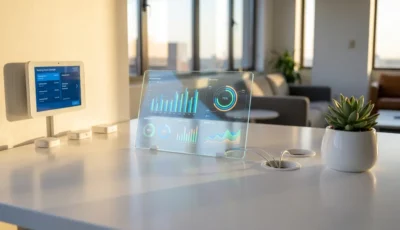
Smart workplace analytics provide organizations with data-driven insights into space utilization, peak usage times, and employee work patterns, enabling informed decisions about flexible policies and workplace design that support work-life balance. These analytics reveal how spaces are actually used rather than how organizations assume they’re used.
Occupancy data shows which areas are most popular at different times, helping organizations understand natural work patterns and peak collaboration periods. This information supports flexible working policies by identifying when office presence is most valuable and when remote work might be equally effective. Organizations can use this data to avoid mandating office presence during naturally quiet periods.
Space utilization metrics help organizations optimize their office layouts to better support different work styles and activities. Analytics might reveal that quiet focus areas are oversubscribed while collaboration spaces sit empty, prompting design changes that better match employee needs. This data-driven approach ensures workplace investments actually improve employee experience.
Usage pattern analysis helps organizations understand how hybrid work models are functioning in practice. Analytics can show whether employees are successfully balancing office and remote work, identifying potential issues before they impact productivity or well-being. This might include recognizing when certain employees are spending too much time in the office without breaks or when teams aren’t connecting effectively.
Real-time reporting capabilities allow facility managers to respond quickly to changing needs, such as adjusting available space during busy periods or identifying technical issues that might impact employee experience. Long-term trend analysis supports strategic planning for workplace policies that genuinely support work-life balance rather than assumptions about what employees need.
How GoBright helps with smart office work-life balance solutions
GoBright provides comprehensive smart office solutions that directly address work-life balance challenges through integrated technology platforms that streamline workplace experiences and reduce daily friction. Our solutions create environments where employees can focus on meaningful work rather than managing workplace logistics.
Key benefits of GoBright’s integrated approach include:
- Unified desk and room booking systems that eliminate workspace uncertainty and support flexible hybrid schedules
- Real-time occupancy analytics that help organizations make data-driven decisions about workplace policies and space optimization
- Automated environmental controls that maintain optimal working conditions without employee intervention
- Interactive touchscreen solutions that provide instant access to workspace information and booking capabilities
- Comprehensive reporting tools that reveal usage patterns and support continuous workplace improvement
Ready to transform your workplace into a smart office that truly supports employee work-life balance? Contact GoBright today to discover how our integrated solutions can reduce workplace stress, support flexible working, and create data-driven insights that benefit both employees and organizations.